A life and body of work shaped by creativity, curiosity, and a deep attention to what lives beneath the surface.
About Asuna
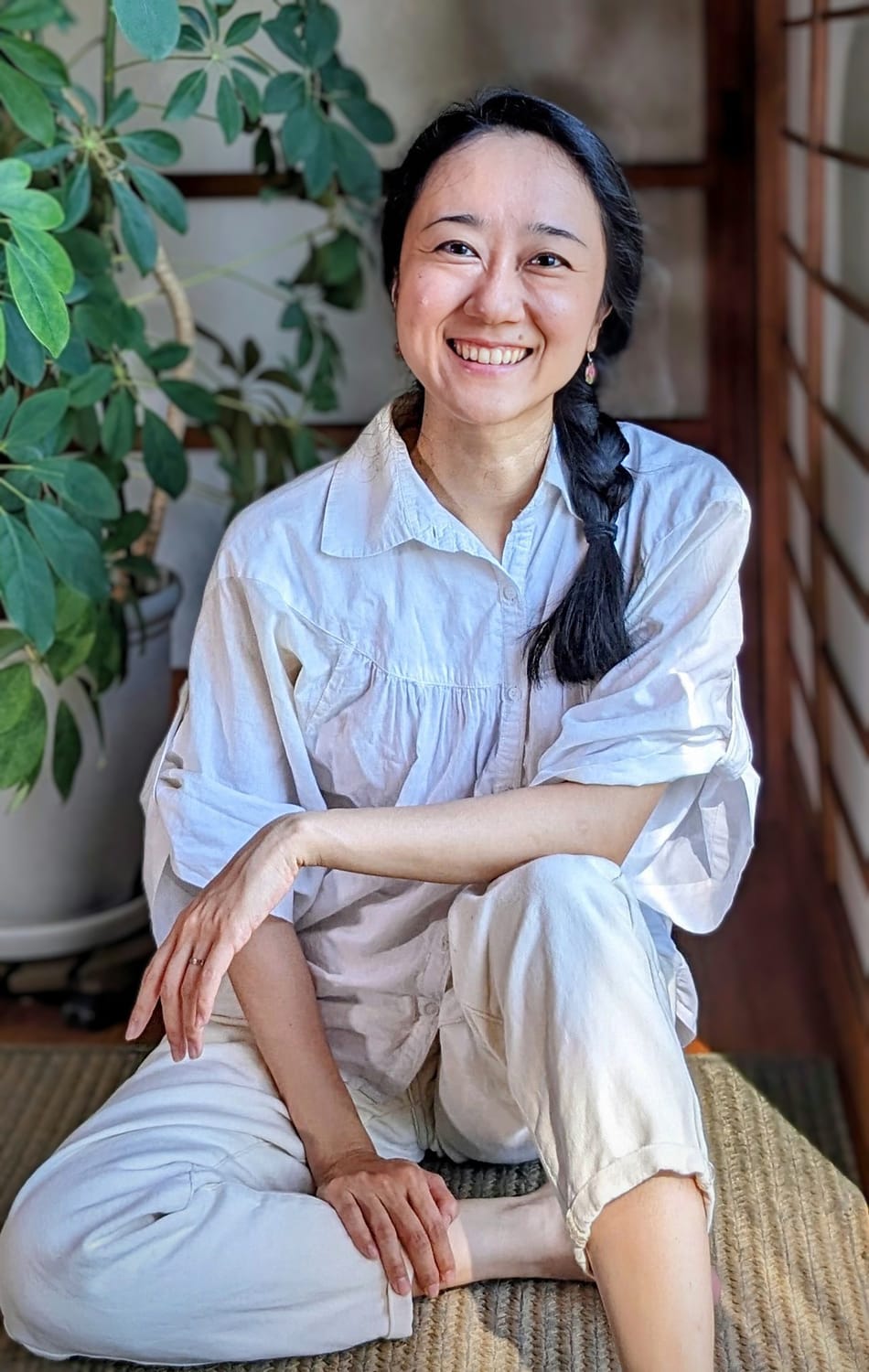
I’m Asuna Osako (she/they), a liberation-based psychotherapist, facilitator, and creative practitioner. My work has taken many forms over the years, but a few questions have remained at the center:
How do we come to know ourselves more fully? How do we stay connected to ourselves while moving through relationships, culture, systems, change, and uncertainty? And what becomes possible when we have more room to be who we are?
I’ve always been drawn to experiences that don’t fit neatly into words or easy categories. I’m interested in the places where body, mind, and soul meet, where personal experience intersects with the world around us, and where creativity can open possibilities that more conventional ways of working sometimes cannot.
How My Work Came Together
My path into this work wasn't a straight line.
I was born in Japan and moved to England with my family when I was four, which was not an easy adjustment. At eight and a half, I returned to Japan. I grew up across cultures, languages, and different ideas about how a person was supposed to be.
In Japan, I became a kikokushijo — a child who had returned after living abroad. I was Japanese, but not always seen as "Japanese enough," in a country where difference was much less readily accepted than it is today. I had also been shaped by another culture and another way of seeing the world. I could be from a place and also not quite feel that I belonged there.
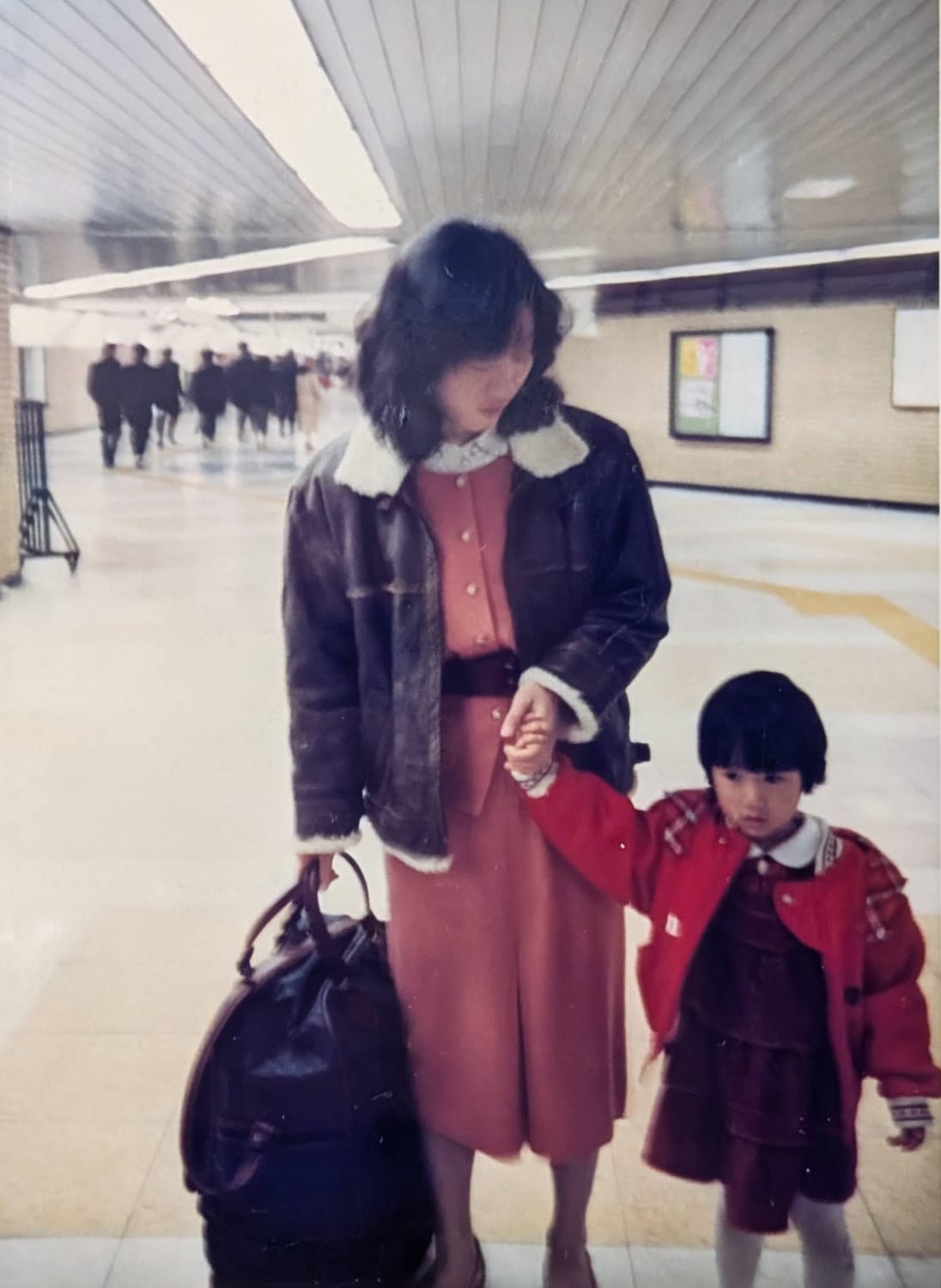
In both places, I experienced being treated as different in ways that were difficult to understand as a child. Some of my earliest experiences of not fitting in, being bullied, experiencing racial discrimination, and feeling that there was something strange or wrong about me stayed with me long after I had words for them.
There was another layer to this experience of being seen. My parents both worked at the school I attended, and eventually my father became its headmaster. Being the headmaster's daughter brought a particular kind of visibility and expectation. I became painfully familiar with the difference between what people see and what is actually happening underneath.
That awareness has stayed with me. I'm attentive to the ways people learn to adapt to the worlds around them: what we show, what we hide, what we translate, and what we come to believe we need to be in order to belong.
My understanding of my own sexuality and gender identity unfolded in layers, too. I knew from adolescence that I wasn't straight, but it took years to have the language, context, and self-understanding to fully recognize and claim that part of myself. Coming out was not the beginning of that process, but one part of a much longer one.
Eventually, I moved to the United States, where I have lived and worked for most of my adult life. Becoming a first-generation immigrant added another layer to an experience I had already known well: learning how to navigate different cultural contexts while figuring out what to carry with me, what to question, and what it meant to belong without having to leave parts of myself behind.
These experiences shaped some of the questions I continue to return to: How do we come to know ourselves when we've spent a lot of time adapting to the worlds around us? What becomes possible when we no longer have to work quite so hard to make ourselves fit?
Creative spaces were some of the first places where I experienced a different possibility.
As a young person, I was deeply immersed in music and theater while also becoming increasingly interested in psychology, therapy, and questions of healing. At the time, I didn't necessarily understand how these interests would eventually come together. I was simply drawn to each of them for different reasons.
Looking back, I can see how important the arts were to my own resilience, healing, and development of my sense of self. Music and theater gave me ways of experiencing, expressing, and moving through things that I didn't always have language for. I didn't think of them as healing practices then. I just knew they mattered deeply to me.
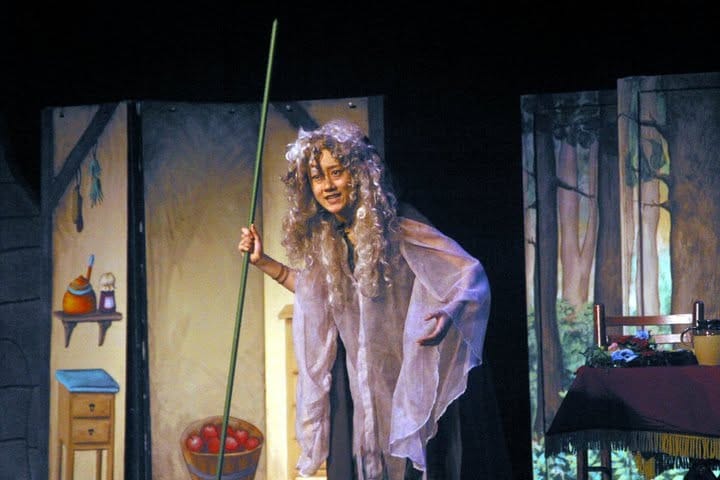
In college, I studied music theatre and psychology. Over time, I became increasingly interested in bringing creative and relational ways of working together with a broader commitment to social justice. Graduate school gave me a place to begin doing that. I pursued a master's in social work alongside training in drama therapy, and the two fields offered complementary ways of understanding people.
Drama therapy gave me ways to work with creativity, ritual, embodiment, imagination, and experiences that can be difficult to reach through words alone. Social work gave me an ecological lens: a way of understanding people not as isolated individuals, but as people shaped by relationships, families, communities, cultures, institutions, and the larger conditions in which we live.
That perspective continues to shape how I understand people.
Over more than 15 years in mental health and community settings, my work has included supporting people affected by gender-based violence, working across cultures and communities, and developing a clinical practice grounded in experiential and relational approaches.
Along the way, my work has continued to expand through somatic and mindfulness practices, sound, restorative justice and circle-based work, and Brainspotting.
Each has offered another way of listening: to the body, to what is happening between people, to the environments we inhabit, and to the experiences that may not yet have words.
The Threads That Connect My Work
Although my work now takes different forms, I don't experience these as separate worlds.
I keep returning to the importance of presence, self-trust, creativity, relationship, and meaning.
I’m interested in what happens when we have enough space to notice our own experience rather than immediately overriding it, explaining it away, or trying to become who we think we are supposed to be.
I’m also interested in the larger contexts that shape our lives. Our inner experiences do not happen in a vacuum. Relationships, culture, history, migration, communities, institutions, and social conditions all become part of how we learn to move through the world.
And I remain curious about the dimensions of human experience that aren't always easy to measure or explain: spirituality, intuition, meaning, and our relationship to those who came before us.
At the center of it all is presence: yours, mine, ours.
When your body no longer braces to be seen...
When your voice doesn’t freeze under pressure...
When your presence no longer hinges on perfection...
You start to feel at home in yourself.
Two Ways My Work Takes Shape
Today, my work takes shape in two main spaces.
Gentle Depth Therapy (New York and New Jersey)
Through Gentle Depth Therapy, I offer trauma-informed psychotherapy for adults in New York and New Jersey. My approach is experiential, relational, somatic and body-aware, with room for creativity and the ways that our histories continue to live in the present.

Easeful Presence Center (available globally)
Through Easeful Presence Center, I offer educational, creative, experiential, and individualized ways of engaging with questions of self-trust, emotional resilience, presence, and living with greater connection to yourself. Offerings include self-paced learning, personal consultations, community pop-up experiences, customized offerings for organizations, and more.
These spaces have different purposes and boundaries, but they grow from the same underlying curiosity about what helps people feel more connected, more present, and more able to meet their lives as they are.
A few things you might not learn from my résumé:
🎶 I love the way creative work can become portals for things deep within us: the song that says something words can't, the image that arrives before we understand it, the pause that lets something emerge.
🍵 I’m drawn to tea, stillness, stories, and conversations that take their time. They have long felt like medicine to me.
🌏 I’ve spent much of my life translating between cultures, languages, expectations, and ways of relating. It has made me especially attentive to what gets said, what goes unsaid, and what can get lost in between.
🪽 A near-death experience changed my relationship with life, death, and the ineffable. I still don't have a neat explanation for it, and I'm okay with that.
🌀 One of my favorite sounds is the exhale that comes when someone finally has enough space to breathe.
What I Keep Coming Back To
I don't believe growth is about becoming a completely different person.
I’m more interested in what becomes possible when we have enough space, safety, curiosity, and connection to encounter ourselves more honestly.
Sometimes that means discovering something new.
Sometimes it means making room for something that has been there all along.
Sometimes it means finding a little more choice in a place where there used to be only habit, protection, or uncertainty.
For me, meaningful work creates conditions for that kind of discovery.
It makes room for complexity without requiring us to lose ourselves in it.
It invites us to listen more closely.
And it leaves room for the possibility that there is more to us, and more to life, than we can understand all at once.
What People Are Saying
Asuna creates a warm atmosphere optimal for self-reflection and delivers feedback with heartfelt compassion and truth.
Camilla Yu
Asuna is one of the best people I have worked with! She is not only a fantastic clinician but she's also one of the most grounded people I know. Her leadership style is such that it puts people at ease right away.
Sara Zaidi
Asuna is extremely intentional, thoughtful, and careful when shining light on difficult-to-reach spaces. She creates safe containers to unblock stuck parts of yourself.
Jess Song